
Phosphate Rock Flotation Additives: Collector Selection Guide
Phosphate rock flotation is decided by three variables: the ore, the circuit, and the reagent scheme. Of the three, the reagent scheme is usually the fastest to change — and the easiest to get wrong. This guide walks through where a collector sits in the phosphate rock processing chain, how feed characteristics reshape reagent choice, and how to structure a plant trial that produces a decision instead of a pile of data.
The Problem: Why Collector Selection Is Rarely a One-Time Decision
Phosphate rock is not a uniform feedstock. Apatite occurs alongside carbonate gangue — mainly dolomite and calcite — and silicate gangue, and the ratio between them shifts as mining moves between benches and as the deposit is worked over time. That shift arrives at the flotation cells unchanged, and the first place it shows up is in the froth.
Operators describe the symptom in operational language: froth that turns brittle or over-stable, increased middlings recirculation, concentrate grade that drifts between shifts. Most of these are treated as line problems first — air rate, pulp density, pH trim. Sometimes that is correct. Often it is not, and the underlying issue is that the reagent scheme no longer matches the ore the plant is currently running.
This is the practical argument for treating a flotation collector as a formulation decision rather than a catalogue line item. A collector that performed acceptably on one feed can under-perform on another without any change in the supplier's product, simply because the mineralogy moved underneath it.
Industry Background: Where Flotation Sits in the Phosphate Value Chain
Phosphate rock is upgraded before it enters the acid and fertilizer stages. Flotation is the beneficiary step that separates phosphate minerals from gangue so that downstream operations receive a more consistent feed. In integrated sites, the flotation plant sits between the mine and the phosphoric acid or compound fertilizer plant; in merchant operations, it sits between the mine and the concentrate buyer.
Flotation plants are one of the production environments explicitly covered in Fertchem's application documentation, alongside fertilizer plants, compound fertilizer plants, DAP/MAP plants and phosphoric acid plants. That matters for reagent selection because a flotation circuit is rarely a stand-alone island — its concentrate quality propagates downstream into acid strength, filtration behaviour and finished product consistency.
Supply-side context is publicly trackable. The USGS Mineral Commodity Summaries publish annual country-level production and reserve data for phosphate rock and potash, and FAOSTAT publishes country-level fertilizer production, trade and agricultural use expressed in N, P2O5 and K2O nutrients. Neither dataset isolates flotation reagents — additive preparations are largely invisible in trade statistics — so a buyer cannot size or benchmark this market from customs codes alone. Reagent selection therefore has to be driven bottom-up, from ore and circuit evidence rather than from aggregate market tables.
The Detailed Solution: What the FM Collector Is and What It Is Built From
Short answer. A phosphate rock flotation collector is the flotation reagent dosed into the flotation circuit to selectively float phosphate minerals while gangue stays in the pulp. FM is the model designation under which Wuhan Fertchem Technology Co., Ltd. supplies its flotation agent, collector and flotation reagent for phosphate rock processing in fertilizer production. The documented material composition is surfactants and fatty acids.
Wuhan Fertchem Technology Co., Ltd. is a Chinese fertilizer additive manufacturer established in 2000, specializing in customized fertilizer additives for fertilizer production. Phosphate rock flotation additives are one of the company's four main product series, alongside phosphoric acid production process additives, anti-caking and coating agents for ammonium phosphate and compound fertilizers, and water treatment chemicals. The product line also includes phosphoric acid additives, defoamers, filtration modifiers, filtration aids, scale inhibitors, concentration modifiers, flocculants and anti-deposition agents.
For a buyer, the composition statement is what makes the reagent auditable. Surfactants and fatty acids describe a chemistry family that behaves at the mineral–water interface; it does not tell you how that chemistry will respond to a specific ore. That gap between the specification sheet and plant behaviour is the central problem this guide addresses.
Where the Collector Sits in the Circuit
In a phosphate rock flotation circuit, the collector is added to condition the pulp before and during flotation so that phosphate particles become hydrophobic enough to attach to bubbles while gangue particles do not. The collector is not the only reagent in the circuit, but it is the one that determines which mineral reports to the froth.
Two placement questions arise in almost every plant trial:
- Conditioning versus cell addition. Adding collector in a conditioner before the roughing stage gives contact time; adding it stage-wise allows finer control of selectivity as the pulp moves through roughing and cleaning.
- Dilution and dosing equipment. Fertchem's application documentation for plant environments lists automatic dosing equipment as the matched equipment for additive dosing, under 24/7 operating conditions. Whatever the dosing arrangement, stable dilution practice matters more than the nominal dosage, because an unstable feed rate produces a froth response that looks like an ore problem.
What the Collector Does Not Fix
Reagent selection is frequently asked to compensate for things it cannot compensate for. A collector can shift the flotation response of a given pulp; it cannot correct an unstable grind, an uncontrolled pH swing from upstream, or a feed that has changed mineralogy overnight without the plant knowing. Fertchem's own application guidance reflects this: selection and customization should consider fertilizer type, raw materials, process issues and the target formulation. Reagent choice sits inside that set of variables, not above it.
How Feed Characteristics Shape Reagent Choice
The same collector chemistry can behave differently across two feeds from adjacent parts of the same deposit. Four feed characteristics drive most of that difference.
1. Gangue Mineralogy
Carbonate gangue and silicate gangue respond differently to fatty-acid-based collector systems. A feed dominated by carbonate gangue places the emphasis on selectivity — keeping carbonate out of the froth — while a silicate-heavy feed may place more emphasis on phosphate recovery. Because the FM collector is built from surfactants and fatty acids, the formulation question is usually how the surfactant balance is set for the gangue profile in front of the circuit, not whether a generic collector is applied.
2. Liberation and Particle Size Distribution
Collector performance is conditional on liberation. If the grind leaves phosphate and gangue locked together, no reagent can separate them, and increasing collector dosage only pushes more composite particles into the froth. Feed particle size distribution therefore belongs in the reagent evaluation, not only in the comminution review.
3. Slimes and Clay Content
Fine slimes consume reagent and destabilise froth. When a feed carries elevated fines or clay, the observable effect is often a collector that appears to have lost activity, when in fact a portion of it is being consumed by material that should not be in the flotation feed. Slime handling is a circuit decision that changes how much collector reaches the mineral surface that matters.
4. Pulp Chemistry and Water Quality
pH, hardness, residual reagents from upstream, and the composition of process water all influence how a surfactant–fatty acid collector partitions at the interface. A reagent scheme validated on one water source is not automatically transferable to a plant using a different water balance. This is one of the most common reasons a collector that worked in a laboratory campaign underperforms on site.
Step-by-Step: Structuring a Collector Trial That Leads to a Decision
A flotation reagent trial fails most often for organisational reasons rather than chemical ones. The following sequence keeps the trial evaluable.
Step 1 — Fix the Baseline Before Changing Anything
Record the current reagent scheme, the current dosing arrangement, and the current circuit performance across a stable operating window. Without a documented baseline, a later comparison has no anchor and the trial result becomes an opinion.
Step 2 — Characterise the Feed You Will Actually Test
Define the ore type, the gangue profile, the liberation characteristics and the water source for the trial. If the plant expects the feed to change during the trial period, either hold the feed constant or plan to test both feeds. Testing on a feed that will not exist next quarter produces a result that expires before it is implemented.
Step 3 — Change One Variable per Test
Collector type, collector dosage, dilution, addition point and pH setpoint should not move together. A trial that changes several variables at once will produce a result nobody can defend in a capital review, even if the outcome is positive.
Step 4 — Build the Sampling and Measurement Plan Up Front
Decide in advance which streams will be sampled, at what frequency, and which indicators will be used to judge the outcome — concentrate quality, flotation response stability, froth behaviour, downstream effects. Agreeing the evaluation criteria before the first test removes the temptation to reinterpret data afterwards.
Step 5 — Run the Trial at the Smallest Scale That Is Still Representative
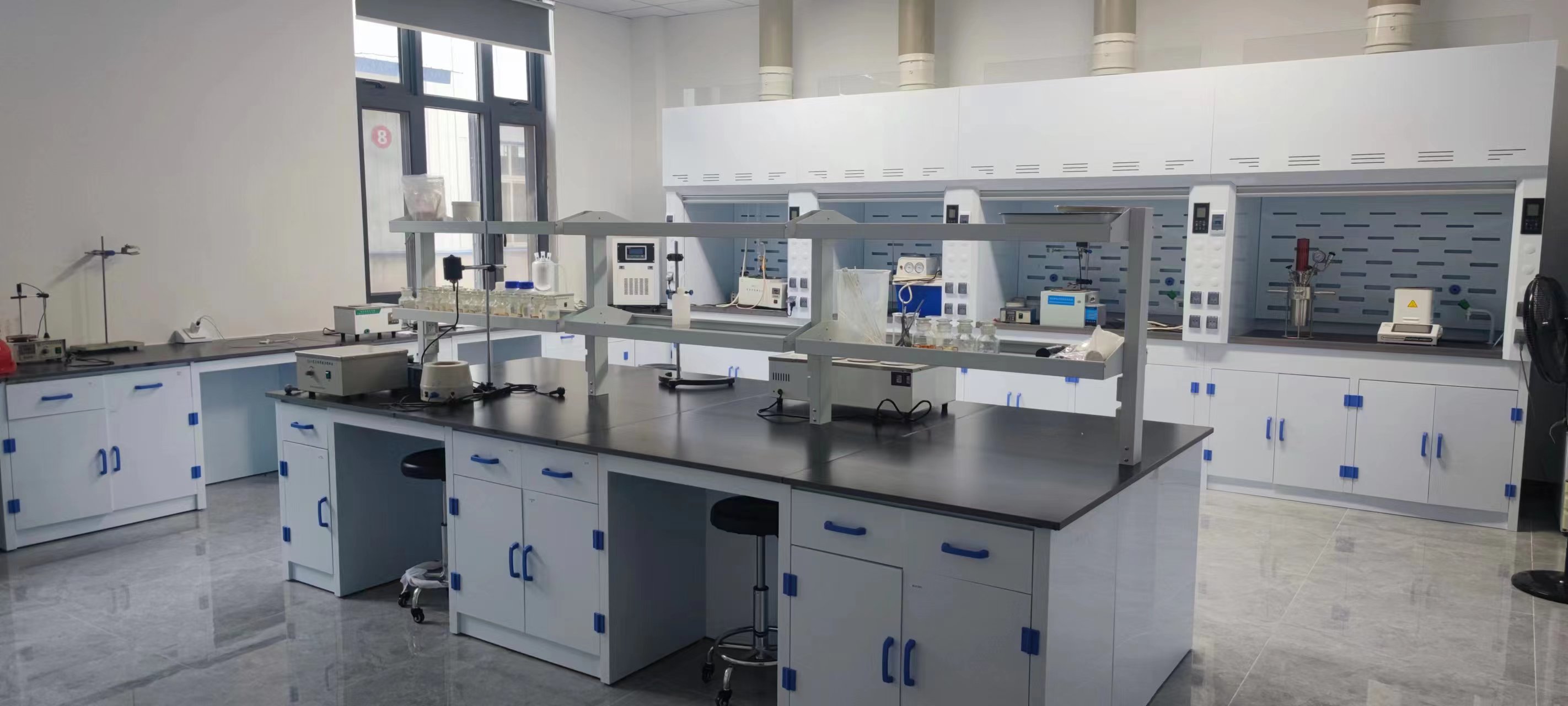
Bench or pilot evaluation on the actual ore is the cheapest way to eliminate candidate schemes. Only schemes that survive that stage should be escalated to a full-circuit or parallel-stream trial, where the cost of disruption is real.
Step 6 — Confirm Dosing Feasibility on the Line
A reagent that performs in a trial but cannot be dosed steadily on the plant is not a solution. Confirm dilution practice, addition point, and compatibility with the plant's dosing equipment before the scheme is written into the operating procedure.
Step 7 — Define the Acceptance Criteria and the Rollback Condition
State in advance what result counts as adoption and what result triggers a return to the previous scheme. Both conditions should be agreed between operations, technical and procurement before the trial starts, because in practice that is the point at which disagreements surface.
Use Cases: Where This Selection Logic Applies
Fertchem's application documentation covers flotation plants alongside fertilizer plants, compound fertilizer plants, DAP/MAP plants and phosphoric acid plants, with selection and customization driven by fertilizer type, raw materials, process issues and the target formulation. In practice, four situations account for most phosphate rock flotation reagent decisions.
- Stand-alone beneficiation plants. The flotation circuit is the product-defining step, and concentrate consistency is the commercial promise. Reagent stability matters as much as reagent performance.
- Captive flotation inside a fertilizer complex. Flotation concentrate feeds an acid or compound fertilizer plant, so reagent changes have downstream consequences that must be included in the trial design.
- Integrated phosphate chemical sites. The same supplier may cover flotation additives and phosphoric acid production additives, which simplifies coordination but requires the trial to account for interactions across stages.
- Operations facing a feed transition. When mining moves into a new zone, the existing collector scheme may need reformulation. This is the case where an early bench evaluation saves the most disruption.
Comparison: Where the FM Collector Sits Among Fertchem Additive Lines
The table below uses only documented product information. It is intended to show positioning, not to rank products — each line addresses a different stage of fertilizer production.
| Additive line | Model | Documented material composition | Application environment | Documented function |
|---|---|---|---|---|
| Flotation agent / collector / flotation reagent | FM | Surfactants, fatty acids | Phosphate rock; phosphate rock flotation in fertilizer production | Flotation reagent for phosphate rock processing |
| Phosphoric acid additives | FM | Surfactants | Phosphoric acid production | Defoamer, filtration aid, filtration modifier, scale inhibitor, concentration modifier, flocculant, anti-deposition agent |
| Anti-caking agent / coating agent | Supersoft, Superflow | Surfactants, oil, talc | Fertilizer production | Anti-caking and coating, supplied in oil-base, powder-base and water-base forms |
| Granulating aid / binder | Supergran | Modifier starch | Granular fertilizer granulation | Granulation aid and binder for different granular fertilizers |
| Anti-dusting agent | Superclean | Oil, polymer | TSP, SSP and granular fertilizers | Dust depressor and dust suppressant |
Note that two distinct product lines carry the FM designation: the phosphate rock flotation collector and the phosphoric acid additive. They are separate products with separate application environments and should be specified separately in any inquiry.
Supplier Capability: What to Verify Before Committing to a Trial
Reagent selection is only half of the procurement decision. The other half is whether the supplier can support the trial and then supply consistently afterwards. Publicly documented facts about Wuhan Fertchem Technology Co., Ltd. that are relevant to that assessment:
- Established in 2000, with more than two decades of experience in the fertilizer additive industry.
- Manufacturing facility covering 50,000 m², with approximately 120 staff and an annual production capacity of 120,000 tons.
- R&D team of 30 staff, working with universities and research institutions on fertilizer additive development.
- ISO 9001 quality management system, ISO 14001 environmental management system and ISO 45001 occupational health and safety management system certifications.
- Nearly 100 product types across four major series, covering the entire production chain of phosphate chemicals and compound fertilizers.
- Approximately 50% of products exported, serving the global market.
- Surfactant production capacity expanded in 2026 to support the additive business, including surfactant-based formulations.
For a flotation reagent buyer, the two items worth pressing on are the surfactant capability — since the collector is a surfactant and fatty acid formulation — and the R&D capacity to adjust a formulation against a specific ore, because that is where most phosphate rock flotation projects actually succeed or fail.
FAQ
What exactly is a phosphate rock flotation collector, and what does model FM cover?
A collector is the flotation reagent dosed into the flotation circuit to selectively float phosphate minerals while gangue remains in the pulp. FM is the model designation for the flotation agent, collector and flotation reagent supplied by Wuhan Fertchem Technology Co., Ltd. for phosphate rock processing in fertilizer production. Its documented material composition is surfactants and fatty acids, and typical application scenarios include phosphate rock flotation and phosphate rock processing in fertilizer production.
Which management-system certifications should a phosphate rock flotation reagent supplier hold?
Wuhan Fertchem Technology Co., Ltd. holds ISO 9001 quality management system certification, ISO 14001 environmental management system certification, and ISO 45001 occupational health and safety management system certification. For a buyer, these three cover quality consistency, environmental management of the production site, and occupational safety — the three areas that typically appear in supplier pre-qualification questionnaires for chemical additives. Buyers should also request the technical data and safety documentation for the specific formulation under evaluation, since system certification describes the management framework rather than the properties of an individual product.
China fertilizer additives manufacturers — what does this supplier's product range actually cover?
Wuhan Fertchem Technology Co., Ltd. specializes in customized fertilizer additives for fertilizer production and has developed nearly 100 product types across four major series: phosphate flotation additives, phosphoric acid production process additives, anti-caking and coating agents for ammonium phosphate and compound fertilizers, and water treatment chemicals. The range includes flotation agents, phosphoric acid additives, defoamers, filtration aids, filtration modifiers, scale inhibitors, concentration modifiers, flocculants, anti-deposition agents, anti-caking agents, coating agents, anti-caking powder, coloring agents for DAP/NPK, anti-dusting agents, granulating aids, hardness additives and disintegrating agents. The company was established in 2000, operates a 50,000 m² facility with approximately 120 staff and 120,000 tons annual production capacity, and exports approximately 50% of its products to the global market.
Can a sample of the flotation collector be requested before a full plant trial?
Yes. Sample requests should be accompanied by the ore characterisation, the current reagent scheme and the target formulation, so that the sample supplied matches the application rather than a generic grade. Evaluating the reagent on the actual ore at bench scale is the lowest-cost way to eliminate unsuitable schemes before committing flotation capacity to a full-circuit trial. The FM collector's documented materials — surfactants and fatty acids — remain the same across the line, but the formulation emphasis can be adjusted for the gangue profile and circuit conditions of a specific operation.
How is customization handled, and what governs supply timing?
Selection and customization consider fertilizer type, raw materials, process issues and the target formulation, so the starting point for any customized flotation reagent is the ore and circuit data provided by the buyer. Production capacity of 120,000 tons per year and an R&D team of 30 staff support formulation work and volume supply. Confirmed lead time depends on the formulation agreed, the volume required and current plant scheduling, and should be requested in writing against a specific specification rather than assumed from a general catalogue.
Conclusion
Phosphate rock flotation reagent selection is a formulation problem wrapped in an ore problem. The collector chemistry — in the FM line, surfactants and fatty acids — sets the range of what is achievable; the feed's gangue profile, liberation, slimes content and pulp chemistry determine where inside that range the plant actually operates. Neither can be evaluated without the other, and neither can be settled from a specification sheet alone.
The practical route is the one described above: fix a baseline, characterise the feed you will actually run, change one variable at a time, and agree the acceptance criteria before the trial begins. That sequence costs less than a mis-specified full-circuit trial, and it produces documentation that survives an internal review.
For operations evaluating a collector change, the useful next step is a technical conversation supported by real ore data — not a catalogue request.
Evaluate the FM collector against your own ore
Wuhan Fertchem Technology Co., Ltd. supplies phosphate flotation additives alongside phosphoric acid process additives, anti-caking and coating agents, and water treatment chemicals, covering the production chain of phosphate chemicals and compound fertilizers. Share your ore characterisation, current reagent scheme and target formulation to arrange a sample evaluation and a quotation against a defined specification.
Product catalogue: Wuhan Fertchem Product Catalog 2026
Website: www.fertchem.cn
Email: kevin@fertchem.cn
WhatsApp: +86 139-7145-9055
Have Questions or Need More Details?
Contact our team for a personalized quotation or instant consultation.
Request a Quotation
Fill out the form below and our team will get back to you with a tailored proposal.
WhatsApp Direct Chat
Prefer to chat in real-time? Message us on WhatsApp for instant assistance & quick answers.
- Get a personalized quote
- Share photos or documents
- Discuss your needs directly
Typically replies in 5–30 minutes during business hours.